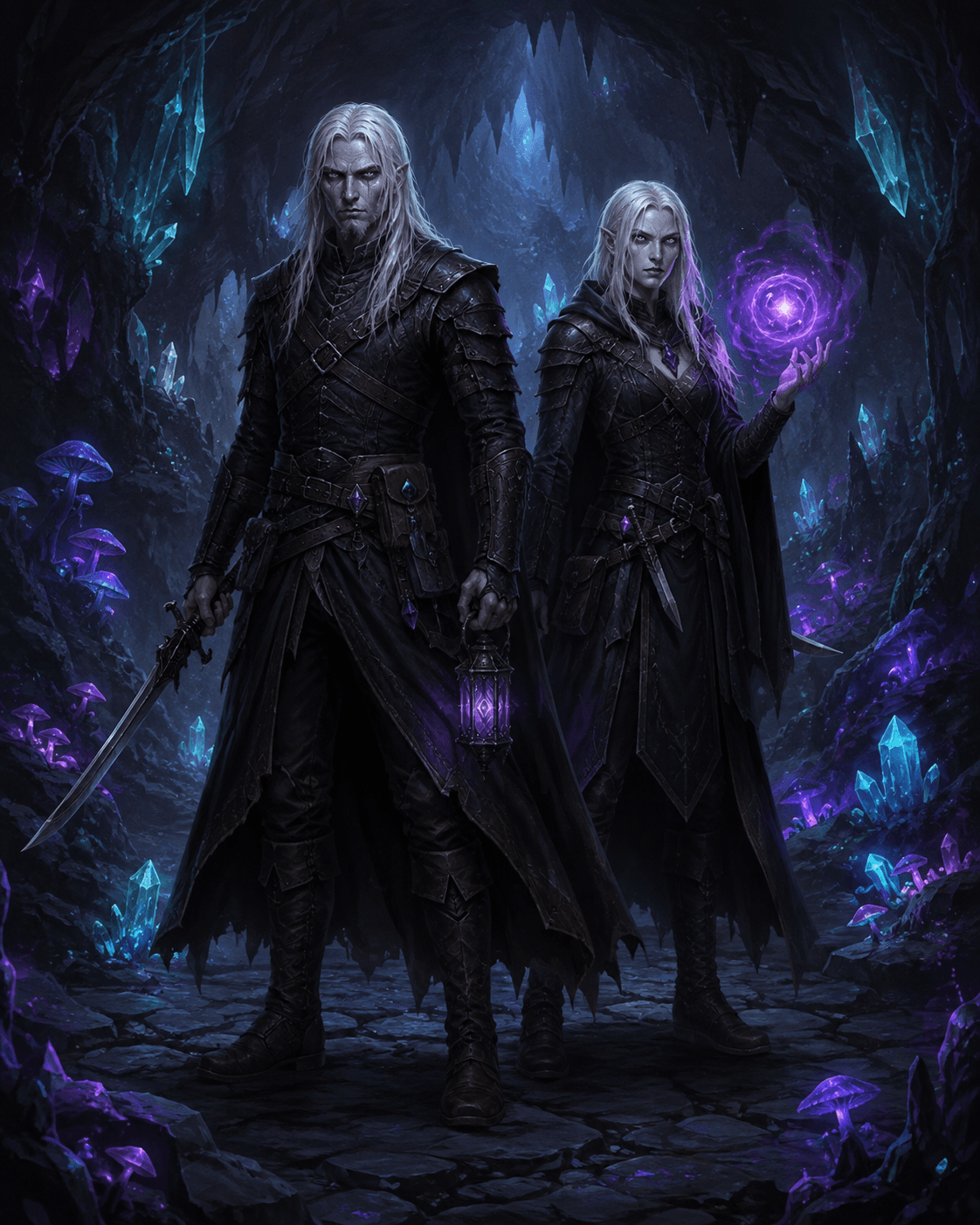
Humans
Druazir-Varjo - - Gatehouse Frontier Culture
Underdark Human
Homeland: Varjo (outer Underdark roads, tunnel-frontiers, and hidden stairways).
Government: Gate Compacts. Warden-captains hold authority by charter; justice is quick because delay gets people killed underground.
Society: Cautious, disciplined, and route-focused. They live by lantern law: you share light, you share air, and you do not break formation in unknown tunnels.
Buildings: Stone gatehouses, pressure doors, sally tunnels, and signal alcoves. Record halls are small; armories and supply caches are not.
Trade:
• Export: Tunnel guides, escort companies, and mapped safe-routes between surface wedges.
• Import: Lamp oil, steel hardware, food stores, and medical supplies.
Lineage Traits
• Experience: Underroad Warden +2 (tunnel navigation, threat spotting).
• Resistance: Necrotic (reduce necrotic harm by 1).
• Weapon: Hand crossbow proficiency.
• Bonus Language: Varjo.
Expanded Lore
Druazir-Varjo (Underdark Human) are Druazir humans shaped by Varjo: deep roads, boundary tunnels, dim waystations, and shadowed redoubts. Adaptable and politically restless, they are often the first to turn a route, settlement, or crisis into a lasting institution. In their lands, daily life is tested by scarcity, secrecy, ambush, and the temptation to mistake caution for cruelty, so their children are taught vigilance, quiet mercy, and survival without needless suspicion before they are taught pride.
Appearance & Bearing
Their looks vary widely by region, with clothing and tools shaped by climate, trade, and civic duty more than by a single ancestral ideal. Among the Druazir-Varjo (Underdark Human), local signs matter: a travel cord, clan clasp, road token, tool scar, weather charm, or festival mark can tell another native where someone was raised and what duties their household claims. Outsiders often notice the surface first, but the people themselves read posture, workmanship, and how a person treats shared supplies.
Society: & Daily Life
Druazir communities make councils, compacts, militias, guilds, and road laws quickly because they know a scattered people survives by agreeing on what must be done before the storm arrives. Their settlements are built around practical trust. Food stores, watch rotations, guest rights, tool access, and emergency shelters are treated as civic matters, not private conveniences. A respected elder is not simply old; they are someone whose decisions have kept others alive through a hard season.
Traditions & Tensions
Their legends center on choice. the oath taken too young, the road opened against fear, the settlement defended without certainty that help will come. The Druazir-Varjo (Underdark Human) keep festivals, tests, and initiation customs tied to their homeland: routes walked at dawn, names spoken before a witness stone, shared meals in dangerous weather, craft trials, rescue drills, or nights spent keeping watch while others sleep. Their greatest tensions usually come from outsiders who want their roads, secrets, tools, or shelter without accepting the obligations that make those gifts possible.
Adventurers
Adventurers from this culture often leave home as oath-bearers, scouts, debt-keepers, apprentices, guards, messengers, or reluctant witnesses to a problem the elders cannot solve from within the settlement. Many carry a small token of home and a larger burden: prove the old ways can survive contact with a changing world.
Checking your codex…
From the Reth Ancestries (Daggerheart) compendium. Ancestry mechanics unlock when you collect this lineage in Hoard and link your account.