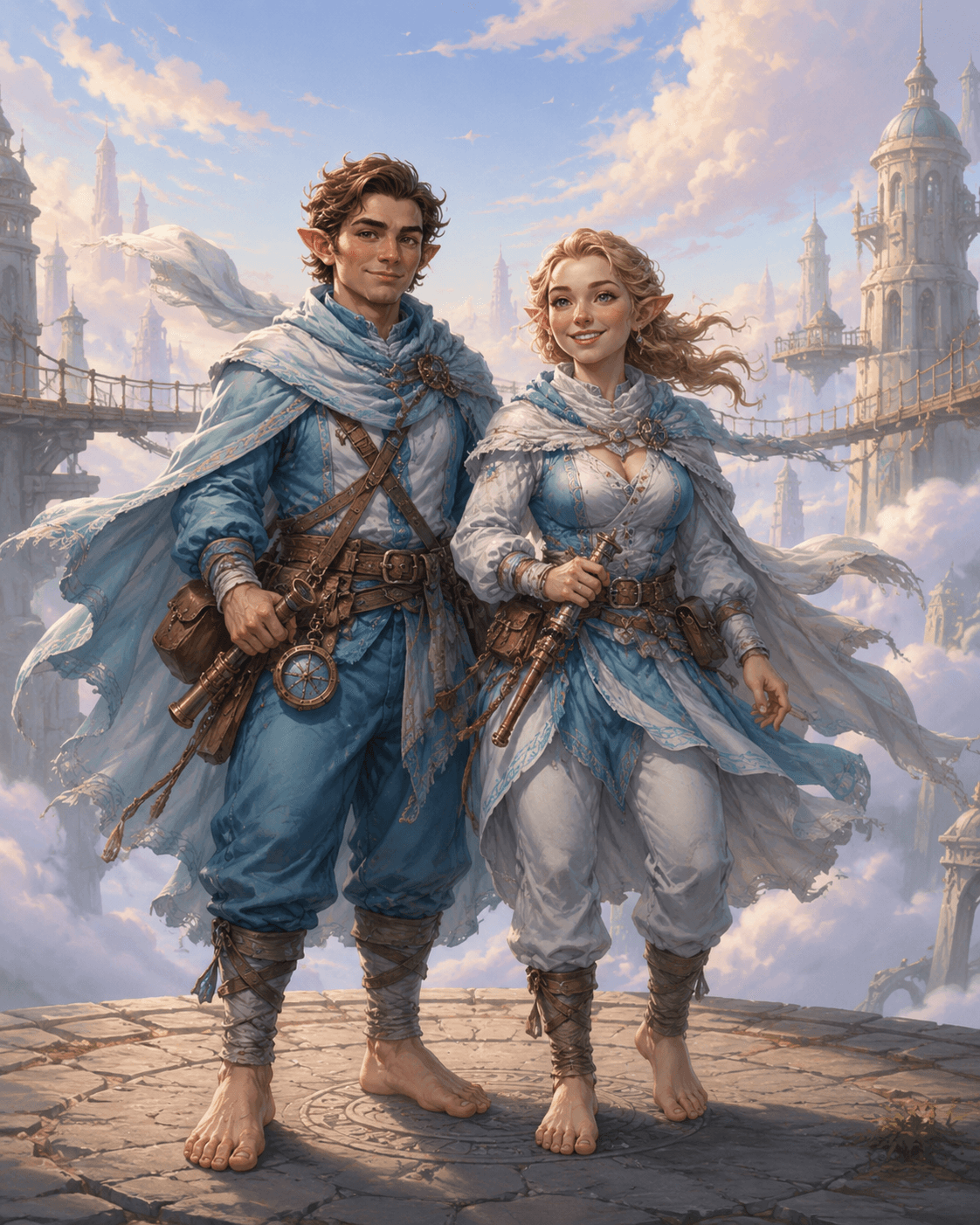
Halflings
Druis-Taivas - - Sky-Road Couriers
Lightfoot Halfling
Homeland: Taivas (high bridges, cliff-perches, and wind-road stations).
Government: Waypost Circles. Each station elects a Wind Speaker to coordinate routes and safety. Disputes are settled at seasonal meetups where routes are reassigned by vote.
Society: Fast, friendly, and hard to pin down. They treat the sky as a commons: nobody owns the wind, but everyone must respect it. Outsiders know them by their festival flags and their quiet competence on ledges.
Buildings: Rope-bridge hamlets, cliff-homes, and wind-sheds for gliders and kites; communal lofts for messenger birds.
Trade:
• Export: courier work, route intelligence, kitecloth, wind-chimes and signal rigs
• Import: durable rope, cloth, metal fittings, preserved foods
Expanded Lore
Druis-Taivas (Lightfoot Halfling) are Druis halflings shaped by Taivas: wind terraces, high bridges, sky routes, and cliffside settlements. Small in stature and formidable in community, they keep the roads, hearths, gardens, ledgers, and hidden shelters that allow larger peoples to believe the world is more stable than it is. In their lands, daily life is tested by height, weather, distance, and the constant demand for balance, so their children are taught clarity, movement, and trust in practiced skill before they are taught pride.
Appearance & Bearing
They tend toward compact frames, nimble hands, expressive faces, and clothing built for work, travel, and weather. Even their formal dress usually keeps room for a knife, pipe, charm, or emergency ration. Among the Druis-Taivas (Lightfoot Halfling), local signs matter: a travel cord, clan clasp, road token, tool scar, weather charm, or festival mark can tell another native where someone was raised and what duties their household claims. Outsiders often notice the surface first, but the people themselves read posture, workmanship, and how a person treats shared supplies.
Society: & Daily Life
Family is broad among the Druis. cousins, neighbors, oath-guests, rescued strangers, and adopted wanderers may all have a place at the table. Their gentleness is real, but so is the memory of every debt and every insult. Their settlements are built around practical trust. Food stores, watch rotations, guest rights, tool access, and emergency shelters are treated as civic matters, not private conveniences. A respected elder is not simply old; they are someone whose decisions have kept others alive through a hard season.
Traditions & Tensions
Their stories praise the quiet turn. a meal that ends a feud, a locked door opened at the right time, a child carried through snow, or a village that refuses to be moved. The Druis-Taivas (Lightfoot Halfling) keep festivals, tests, and initiation customs tied to their homeland: routes walked at dawn, names spoken before a witness stone, shared meals in dangerous weather, craft trials, rescue drills, or nights spent keeping watch while others sleep. Their greatest tensions usually come from outsiders who want their roads, secrets, tools, or shelter without accepting the obligations that make those gifts possible.
Adventurers
Adventurers from this culture often leave home as oath-bearers, scouts, debt-keepers, apprentices, guards, messengers, or reluctant witnesses to a problem the elders cannot solve from within the settlement. Many carry a small token of home and a larger burden: prove the old ways can survive contact with a changing world.
Checking your codex…
From the Reth Ancestries (Daggerheart) compendium. Ancestry mechanics unlock when you collect this lineage in Hoard and link your account.